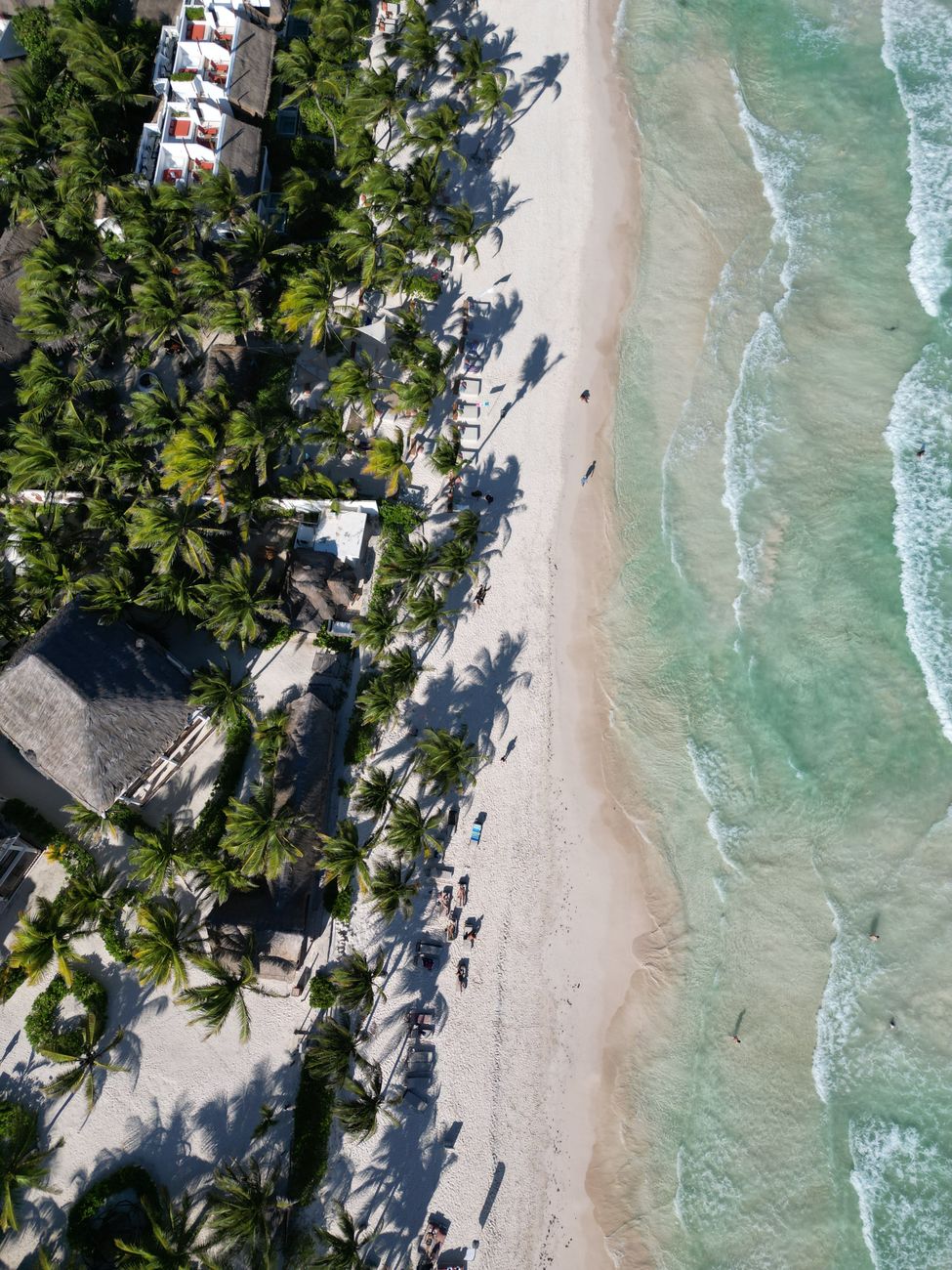
Do you need a car in Tulum?
No. You can spend a full week here without renting anything, and plenty of our guests do. Tulum is flat, short and laid out in two lines: the beach road running along the sea, and the town, inland, on Highway 307. Almost everything you'll do falls on one of those two.
A car only earns its keep if you plan to drive somewhere different and far every day. If your plan is beach, cenotes a couple of times and dinner out, skip the rental and the parking.
A bike handles the everyday
Inside the beach zone, the bike wins. The road is flat, there's a bike lane on several stretches, and everything along that line (beach clubs, restaurants, the public beach) is minutes of pedalling away.
Two things you learn fast:
- Ride early or at sunset. At midday the sun is brutal and there's no shade on the road.
- Rear light if you're coming back after dark. The beach stretch isn't well lit and there is traffic. Most boring advice on this page, most useful.
You can go barefoot on the sand all day, but put shoes on for the road.
The combis between town and the beach
Between central Tulum and the beach zone there are combis charging around 25 pesos per person. It's the transport the people who work here use, it runs often, and it is by far the cheapest way to cover that stretch.
You catch them in town and get off wherever you ask along the beach road. No marked stops, no printed timetable: you raise your hand, they stop. That's the system.
Colectivos on the 307, for leaving Tulum
If you want Playa del Carmen, Akumal or any point along the coast in between, the colectivo is the way. White vans that run along Highway 307, leaving town when they fill up (which is often) and dropping you at whichever kilometre you name.
A couple of house rules:
- You pay cash, in pesos, on the way in or out depending on the driver.
- Tell the driver your destination as you get on, especially if you're getting off at an unmarked turn like a lagoon or a cenote entrance.
- Coming back, stand on the opposite side of the highway and raise your hand. They run until dusk.
Taxis: how not to overpay
Taxis are everywhere, especially in the beach zone and in town. They don't use meters, and fares vary with the hour, the stretch and the season.
One rule that matters: ask the price before you get in, and agree it in pesos. It isn't hard bargaining, it's just how it's done. If the number doesn't suit you, another taxi is right behind.
At night, coming back from dinner in town, a taxi is the sensible call even if you rode in. Leaving the bike and collecting it the next day costs you nothing.
When private transport is actually worth it
Three moments where private transport wins:
- Airport arrival and departure, with luggage and after a long flight.
- Cenotes, if you're seeing more than one or want to leave at 8 a.m. without negotiating anything.
- Full-day outings, ruins plus lunch plus a cenote, where the colectivo makes you wait at every leg.
At The Nest we offer private transportation and tours. Tell us and we'll set it up, so you're not sorting it out at the door.
A normal day without a car
Here's what it looks like in practice:
| Moment | How you move |
|---|---|
| Breakfast and beach | On foot. The beach is a few steps away |
| Morning cenote | Private transport or an agreed-price taxi |
| Lunch on the beach road | Bike |
| Dinner in town | Combi there, taxi back |
| Day trip to Playa del Carmen | Colectivo on the 307 |
Not one of those lines needs a rental, insurance or a parking spot in high season.
What to carry, always
Cash in pesos, in small notes. Combis, colectivos, taxis and cenote entries are all cash. We're a cashless hotel and everything on property goes on card, but the street in Tulum still runs on paper money. Withdraw pesos in town and keep coins for the combis.
Everything moves slowly here, and getting around without a car fits that rhythm. You still arrive, you just see more on the way.