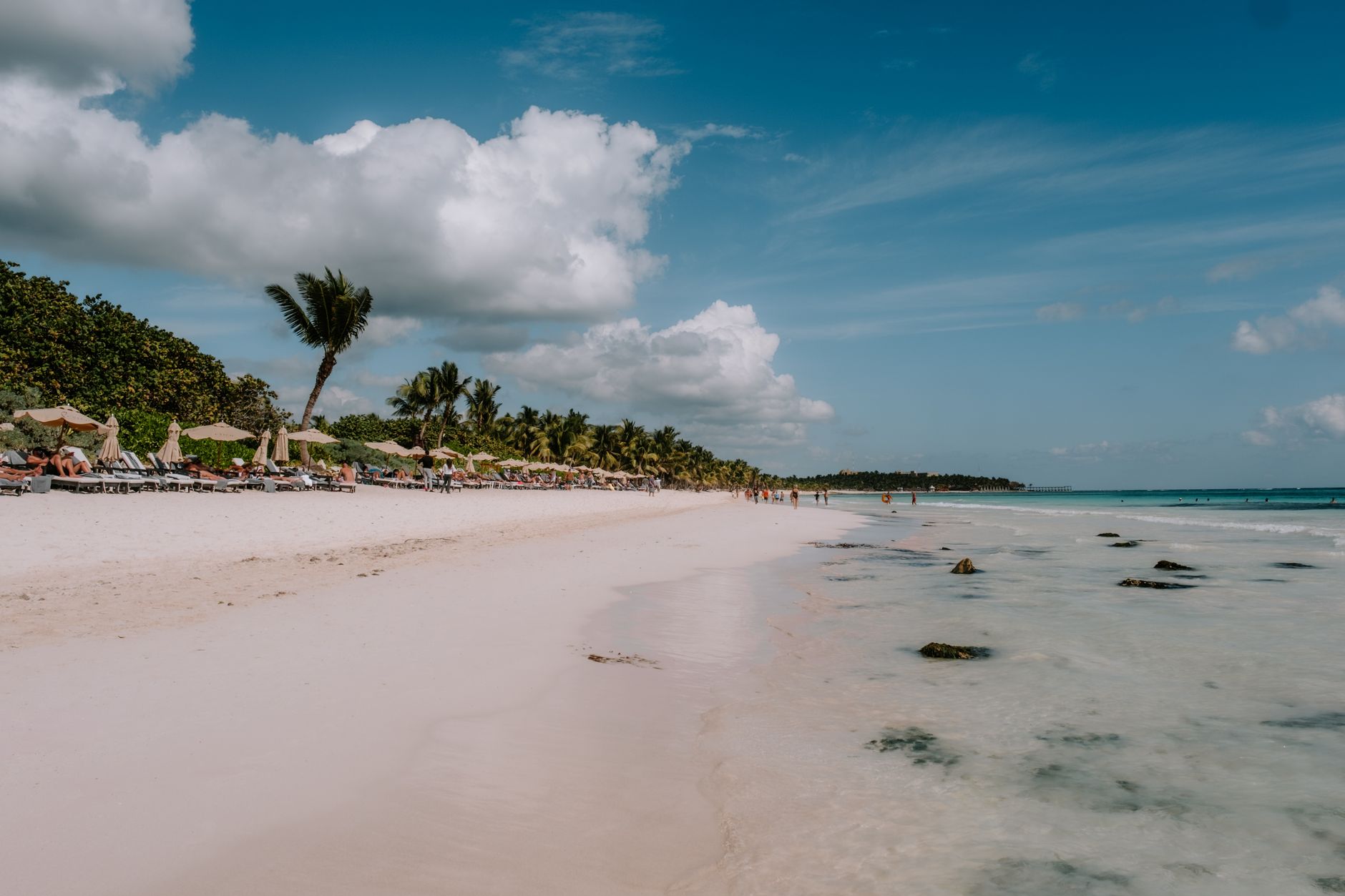
Nobody tells you this before you book, so we will: Tulum gets sargassum, and some months it gets a lot. It doesn't ruin a trip, but it does change how you plan one. Here's what we know from watching this beach every morning.
Which months have sargassum in Tulum?
April through October, peaking June to August. The clear-water window is November through March. That's the short answer and it's good enough for planning months ahead.
The longer answer is that sargassum doesn't read calendars. Atlantic currents push it in bursts, and a clean beach can wake up loaded 48 hours later, or the other way around. In 2026 there were unusual early arrivals in January and March, and the University of South Florida's Optical Oceanography Lab forecast a near-record year for the Mexican Caribbean.
| Month | What to expect |
|---|---|
| January | Usually clear |
| February | Usually clear |
| March | Season starts, arrivals increase south of Cancún |
| April | Season underway, Tulum among the first hit |
| May | Significant arrivals across the Riviera Maya |
| June | Peak |
| July | Peak |
| August | Still heavy, cleanup crews at capacity |
| September | Tapering, still active in the south |
| October | Clear improvement north, south still active |
| November | Season ends, beaches recover |
| December | Best month for clear water |
Why does Tulum get more than Cancún?
Geography, not bad luck. Tulum's coast faces the open Caribbean with no large reef in front of it to slow the currents down. Cancún and Puerto Morelos have more protection, and Cancún runs a far bigger cleanup operation. Akumal, just up the coast from us, gets hit nearly as hard as Tulum for the same reason.
That also explains something that surprises people: two beaches twenty minutes apart can look completely different on the same day.
What sargassum actually is
It's a free-floating brown macroalgae that comes from the Sargasso Sea in the North Atlantic. Out at sea it's habitat for turtles and juvenile fish. The trouble starts when it lands: it breaks down fast, releases a rotten-egg gas, and pulls oxygen out of the water at the shoreline. That's why crews clear it early, before the sun heats it up.
How to check before you come
Check two or three days out, not two weeks. Long-range forecasts aren't much use here, short-range ones are. Live monitoring sites publish daily conditions beach by beach along the Riviera Maya, Tulum included, usually with same-day photos. Traveler groups post unfiltered morning photos too, and honestly those are sometimes the most reliable source you'll find.
If you land on a heavy day, go early. Crews work at dawn and the water is usually clearest before midday.
What to do on a sargassum day
We don't cancel the day here, we move it inland. This is the part of the trip people find by accident and then tell us was their favorite.
- The cenotes. Obvious and the best call. Sargassum is an ocean thing, so it never reaches a cenote. Fresh water, cold and clear, and there are several within half an hour of the coast. We can help you set the trip up.
- The Tulum ruins. They look better from the top of the cliff than from the water anyway, and first thing in the morning there's a fraction of the crowd.
- A long lunch. A sargassum day is a good excuse to eat slowly. We have a few tables where you can lose an afternoon, dinner at NÜ included.
- A slow day. Our spa exists for exactly this. Everything moves slowly here anyway, and on a windy or weedy day it moves slower still.
If clear water is the point, come November to March
That's the postcard season: turquoise water, less wind, cool mornings. It's also high season, so rates and booking terms shift with the date. Our deposit and cancellation conditions are different between December 21 and April 20, so it's worth reading them before you book.
And if you're coming in June or July, come knowing. The beach is a few steps away and some days it'll be spotless and some days it won't. The Tulum people remember is almost never just the shoreline. Take your time.
What we won't do
We won't post a three-year-old photo and pass it off as this morning, and we won't promise you turquoise water in August. We're small on purpose and we'd rather you arrive with the right expectations than arrive surprised. Write to us before your trip and we'll tell you how the beach looks that week, exactly as it looks.