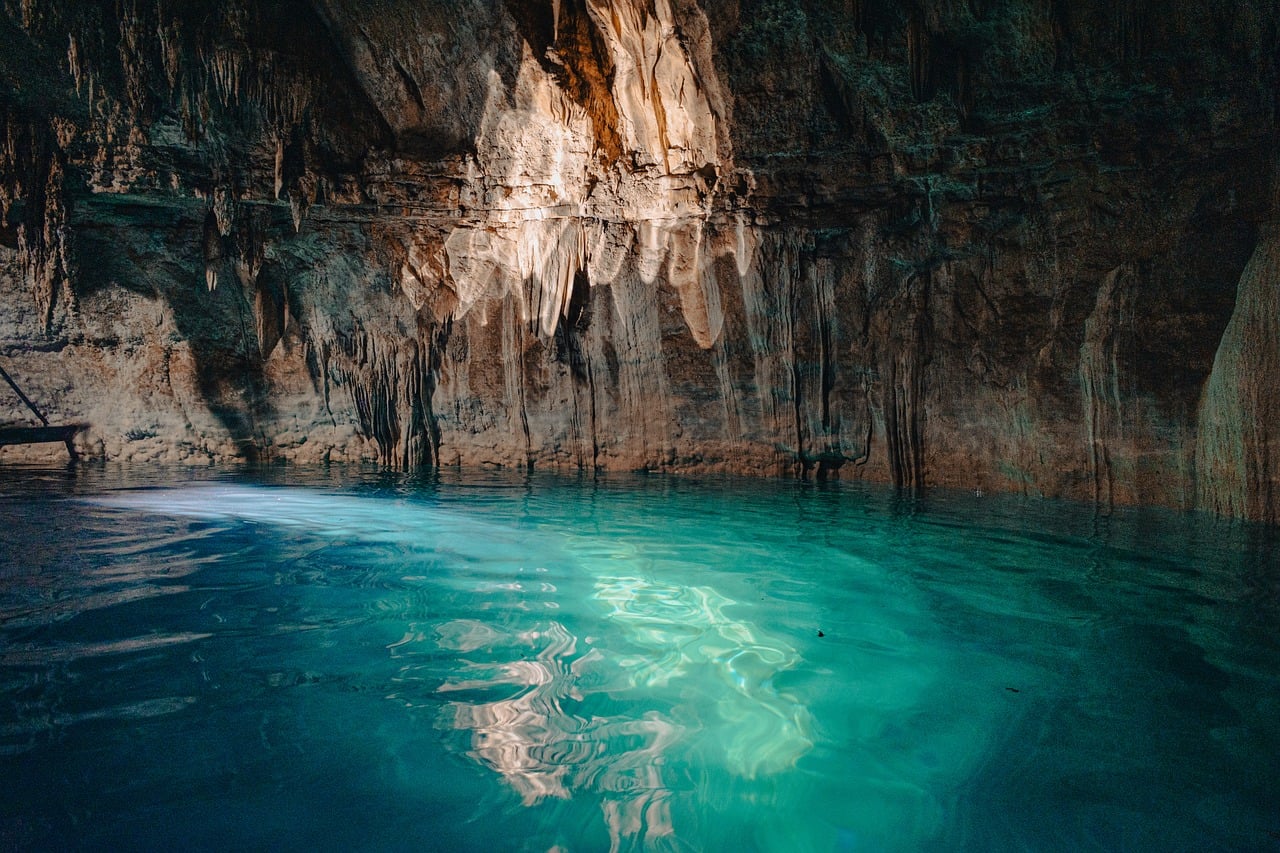
What Yal-kú actually is
Yal-kú is a lagoon at the northern end of Akumal, about 25 km up the coast from Tulum, where underground fresh water from the cenote system surfaces and meets the Caribbean. That meeting is the whole point. The water is brackish, the lagoon is walled in by limestone, and because it opens to the sea through a narrow mouth there are no waves and almost no current.
People call it a snorkeling spot, which is true but undersells it. It's more like swimming through a flooded garden. Rock fingers, mangrove edges, deep blue channels between shallow shelves, and fish everywhere because the calm water suits them as much as it suits you.
Why we send guests there
Because it's the easiest water on this coast to be a beginner in. No waves to time, no surf to walk out through, nowhere that the bottom drops away suddenly without warning. If you've never put your face in the sea with a mask on, or you're bringing someone who's quietly anxious about it, Yal-kú is where that first swim should happen.
It's also shaded in parts and walkable. There are paths and stairs along the edge, so you can get in, swim a stretch, get out and walk back rather than committing to a long return leg.
What you'll see in the water
Schools of small reef fish in the shallows, parrotfish nosing the rock, and the occasional larger one where the channel deepens. Not a coral reef, so don't arrive expecting one. The draw here is quantity and closeness rather than reef structure.
One quirk to prepare for: where fresh water sits on top of salt water, the boundary blurs everything. It looks like you've smeared your mask. You haven't. Swim down or across a couple of metres and the water sharpens again. It's called a halocline, and honestly it's one of the nicer things to swim through once you know it's not you.
Rules to know before you arrive
Yal-kú is protected, and the rules are enforced at the entrance rather than suggested:
- Sunscreen. Standard sunscreens aren't allowed in the water. Come with nothing on, or a genuinely biodegradable one, and cover up with a rash guard instead. This is the rule people get caught out by most.
- Fins. Generally not permitted. The lagoon is shallow in places and fins kick up sediment and damage what's underneath.
- Life jackets. Usually required or strongly encouraged, and available on site.
- Feeding fish. No.
Entry fees, opening hours and what's included in a ticket have all changed over the years, so check the current details the day you go rather than trusting a blog post. Including this one.
Getting there from Tulum
Akumal is straight up Highway 307, roughly 25 minutes by car from Tulum. Yal-kú is at the far north end of the Akumal beach area, past the main bay, and it's signed once you're in the village.
By colectivo, take one heading north and ask for Akumal. You'll be dropped at the highway entrance, and from there it's a longer walk in than most people expect, so plan on a taxi from the crossing if it's hot. Tours are one of the things we arrange for guests, so if you'd rather not solve the logistics, ask us and we'll sort out the trip.
When to go
Early. Open the day with it. The light is better before midday, the water is quieter, and the tour groups from the resorts to the north tend to arrive later in the morning. Aim to be in the water when it opens and out again by lunch, then take the rest of the day slowly.
If you only have one water day and you want reef and turtles, Akumal Bay next door is the better-known choice for that. If you want calm, shade and a swim you don't have to brace for, it's Yal-kú.
Making a day of it
Akumal village is small and easy. Swim the lagoon in the morning, eat near the bay, and be back on the Tulum beach road by mid-afternoon with time for a nap before dinner. That's the shape of it. Aquí todo va despacio, and the trips that work best here are the ones with one thing in them, not four.
Back at the property, breakfast is included and waiting for you the next morning: homemade granola, Greek yogurt, pastries, seasonal fruit, coffee and juice. Eat it slowly. Then decide whether today is a cenote day. Los cenotes están cerca.